There's a version of investor prep that almost every founder does. Update the deck. Practice the two-minute pitch. Look up the partner on LinkedIn. Maybe read the fund's "what we invest in" page. Walk into the meeting feeling ready.
Then the partner says something like "we actually just backed a company doing exactly this" — and the conversation quietly ends over the next twenty minutes, both sides going through the motions.
The research most founders do prepares them for the pitch. It doesn't prepare them for the investor. Those are different exercises.
What does "researching the investor" actually mean?
Three things that most founders either skip entirely or get wrong:
The fund's real thesis, not the one on their website. "We invest in founders building at the frontier" describes virtually every VC fund operating today. What tells you something is the last eight investments: check sizes, stages, sectors, co-investors. That pattern is the actual thesis — the decision-making framework they use internally, not the brand language they use publicly.
A fund that claims to invest across B2B and consumer but has backed six B2B SaaS companies between €500k and €2M in the last two years is not going to lead a consumer seed round. They might take the meeting. They will not write the check.
Portfolio conflicts. If the fund already backed a company in your category, they will almost certainly not back you. Not because your company is worse, but because it creates an irresolvable conflict — they can't help both of you with introductions, hiring, customers, and follow-on. They won't say this in the meeting. They will say they want to see more traction.
A founder spends three weeks getting a partner meeting. The meeting goes well. They hear "we'll be in touch." Two weeks later, a soft pass with no specific reason given. It takes another month to find out the fund backed a direct competitor eight months ago. The meeting was always a courtesy.
Knowing this beforehand doesn't just save time. It changes the entire outreach strategy: deprioritise funds with conflicts, concentrate energy where there's a clear path to yes.
The partner's objection pattern. Every investor has a question they return to for companies at a particular stage and in a particular category. For early B2B: "how do you get the first ten customers?" For consumer: "what's day-30 retention?" For marketplaces: "how do you solve cold start?"
These aren't gotcha questions. They're the actual concerns that determine whether a deal advances past the first conversation. A founder who already knows the question is coming — who walks in with data prepared for it — is in a completely different conversation.
"Preparation isn't about having perfect answers. It's about not being surprised. Surprise kills confidence in ways that are hard to recover from in the room."
Why is this research so rarely done well?
It's not laziness. Founders raising capital are doing this across twelve to twenty funds simultaneously, while also running their company. The research that was supposed to be thorough degrades under time pressure. What started as "I'll spend two hours on each fund" becomes a fifteen-minute skim the morning of the meeting.
The other problem is that the useful information isn't in one place. Real thesis is in investment announcements, not fund websites. Portfolio conflicts require cross-referencing the portfolio page with Crunchbase. Partner objection patterns live in podcast transcripts, conference talks, and years of Twitter threads. Pulling all of that together for a single investor takes an hour and a half if you're doing it properly. Most founders don't have an hour and a half per fund.
How does PitchEdge solve this?
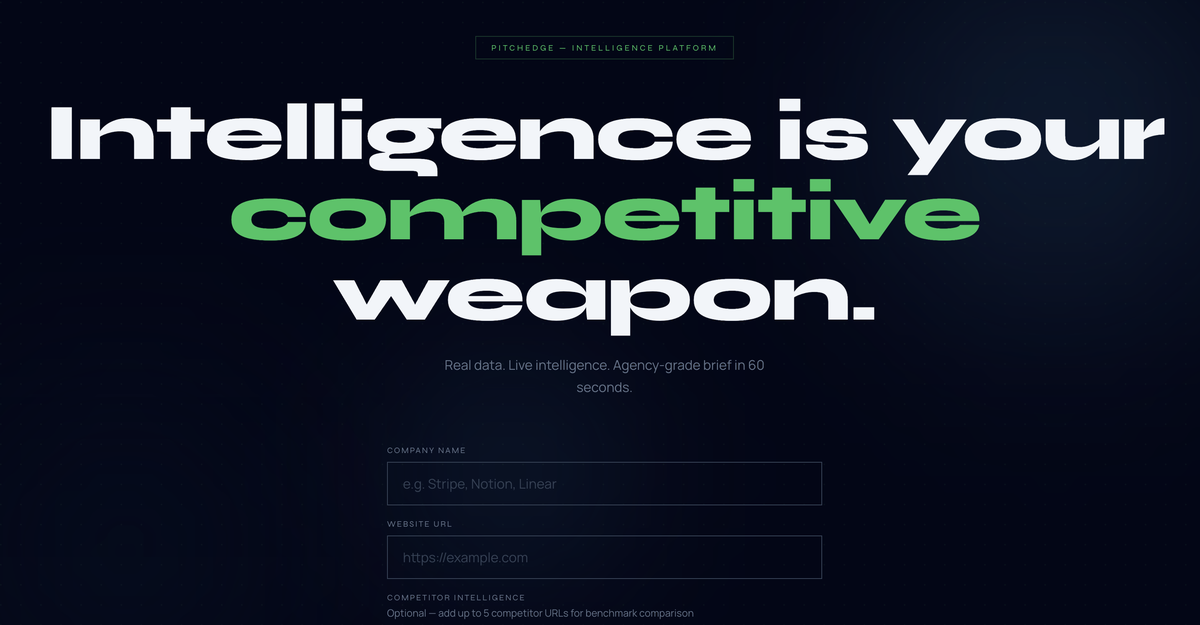
PitchEdge takes an investor name and fund and generates a brief covering all three: the fund's actual thesis from recent check data, any portfolio conflicts relevant to your category, and the objection pattern of the specific partner. It pulls from public investment records, the partner's writing and speaking history, and portfolio data — and structures it into something you can read in ten minutes the night before.
The goal isn't to help founders game the meeting. It's to make sure they're not caught off guard by information that was always publicly available but took too long to gather manually. Two hundred founders are using it. The feedback that comes back most often: "I felt like I already knew them before I walked in." Which is exactly the point.
Does this kind of prep actually change outcomes?
There's no clean study to cite here. But here's what I've observed: founders who understand portfolio conflicts before a meeting stop wasting meetings. Founders who understand partner objection patterns handle those objections differently — not because they've rehearsed a clever answer, but because they saw it coming and it didn't throw them.
There's also a subtler thing. When you understand a partner's investment philosophy well enough to speak in their framework — when you reference the thesis rather than pitching into the void — the conversation changes register. It goes from a pitch to a discussion. That's the environment where partners say yes.
The venture world in any given city isn't large. How a meeting goes follows you. The partner who passed tells their co-investors. The warm intro to the next fund often comes with context from the last one. The prep you do for the first meeting matters to every meeting after it.
Founders raising well treat each meeting as if it's the only one they'll get with that fund. Because in any meaningful sense, it is. A poor first meeting rarely gets a second chance — the market is too small and memory too long.
What should the prep actually cover?
If you're doing this manually, here's the minimum for each investor meeting:
- Last 5–8 investments — check sizes, stages, sectors. Look for the pattern, not the stated thesis
- Portfolio overlap scan — every company in their portfolio, cross-referenced against your category
- Partner research — the specific partner you're meeting: their background, any companies they've personally championed, what they write or speak about
- Objection anticipation — based on stage, category, and what this partner cares about: what are the two questions they will definitely ask?
That's the floor. Done properly, it takes ninety minutes per fund. Which is why most founders don't do it. The question is whether ninety minutes is worth it for a meeting that, if it goes well, might be worth several million euros. I think the math is obvious.